Visualize the future we want to make possible

In a world overwhelmed by urgency, constraints, and successive crises, visualization deserves to be taken seriously again. Not as an escape from reality, nor as wishful thinking, but as an inner discipline capable of focusing our attention, supporting our actions, and making the future we wish to shape more livable.
When reality constricts the imagination
Sometimes reality takes up so much space in our field of vision that it ends up narrowing our capacity to imagine. We see the constraints, the power dynamics, the resistance, the deadlines, the institutional or human frailties, the risks of failure—and we are right to see them, for lucidity does not consist in glossing over difficulties or taking refuge in a form of circumstantial optimism. But this same lucidity, when it is no longer linked to a capacity for projection, can become narrower than it realizes. It continues to present itself as realism, even as it sometimes begins to resemble an imagination captured by the limits of the moment.
Lucidity becomes incomplete when it can no longer open up new horizons.
Visualization as an inner discipline
It is here, it seems to me, that visualization deserves to be taken seriously again—not as an escape from reality, nor as that magical thinking which suggests that merely imagining a result is enough to produce it, but as an inner discipline that makes the future we wish to serve more alive, more livable, and more concrete. To visualize is not to deny what resists. It is to refuse to let what resists occupy all of one’s inner space. It is to create within oneself a place where the desired future ceases to be an abstract idea and becomes a scene, a posture, a movement, a way of acting that one is already beginning to recognize.
What Sport Teaches Us
Sport offers a useful analogy here, because it does not confuse imagination with vague dreaming. An athlete who mentally rehearses a movement does not merely wish to succeed. They see themselves succeeding with precision. They feel the sequence, the breathing, the rhythm, the point of balance, the completion of the movement. This internal repetition does not replace training, but it deepens it. It makes the movement more familiar before it is fully mastered. It prepares the body, attention, and will to recognize the path to success when the time comes to act.
A visualization repeated with enough precision does not remain merely an image. It becomes a familiarity. And what becomes familiar gradually ceases to seem unattainable to us. This is perhaps one of its deepest powers: it does not merely change what we see; it changes what we believe ourselves capable of inhabiting. It creates a form of anticipatory memory, as if a part of us had already begun to recognize the path even before external reality confirmed it.
A sufficiently clear inner image can become a kind of silent roadmap.
Inner images of leadership... and of one’s life
There is a much deeper lesson here for leadership than is usually recognized. We never lead solely based on a plan, a strategy, a timeline, or a dashboard.
We also lead based on the images we hold within: the image we have of ourselves under pressure, the image we form of our team, the image of what we believe is possible or impossible, the image of the conflicts we fear, the conversations we put off, the decisions we hesitate to take. Without even realizing it, we are already repeating certain scenarios. And these scenarios, through constant replay, eventually shape our attention, our energy, and the way we take action.
That is why it is too simplistic to say that visualization serves only to motivate us. It serves first and foremost to reclaim our imagination, especially when it has been taken over by fear, fatigue, past experiences, or prevailing narratives. We might call this caution, and sometimes it is indeed caution. But it also happens that what we call realism has become a way of giving too much weight to what has already hurt, disappointed, or limited us. Visualization then becomes an exercise in discernment: what do we truly see, and what do we repeat because our mind has grown accustomed to returning to the same outcomes?
Inhabiting a posture before embodying it
Visualizing to inhabit the future we wish to make possible is therefore not an escape from reality. It is asking ourselves, with a very concrete sense of purpose, what stance this future already demands of us. If we want a more responsible team, can we see ourselves delegating without immediately taking back control? If we want a more courageous conversation, can we see ourselves having it without hardening our stance, without justifying ourselves too quickly, without seeking to win rather than to clarify? If we want a healthier organization, can we see ourselves stop single-handedly compensating for the flaws that the system should learn to address? If we want to navigate a period of pressure without losing ourselves, can we see ourselves acting with more stability than the environment around us?
From Image to Inner Compass
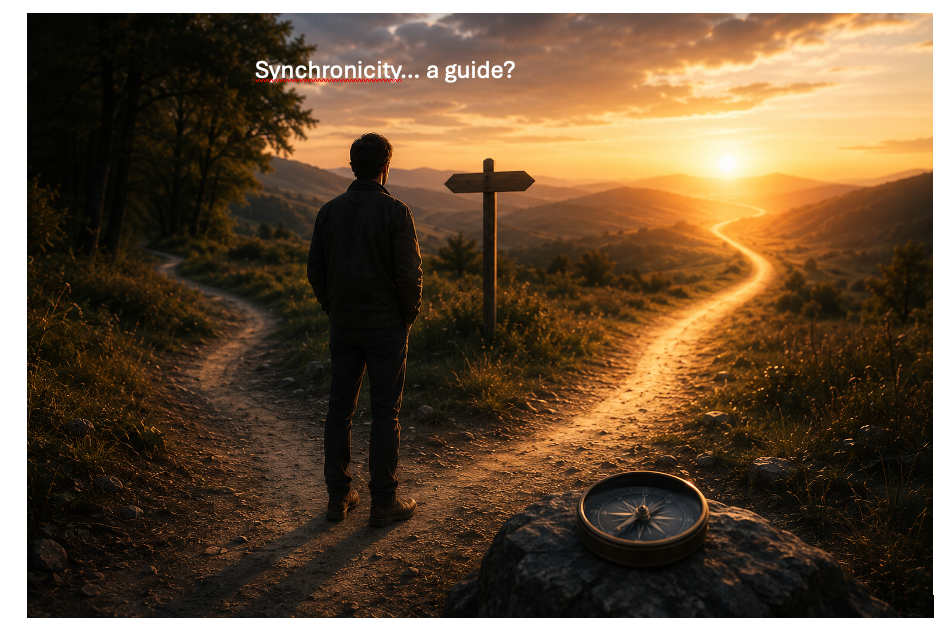
This is where visualization ceases to be merely decorative. It becomes a work of coherence, but also of deep orientation. It does not merely produce a pleasant image of the future. It begins to chart an inner path between what we wish to bring about and what we must learn to perceive, choose, embody, and repeat starting now. As we inhabit it, the image becomes less a representation and more a guidepost. It acts as an inner compass: not to spare us from thinking, but to remind us, amid the noise, in which direction we have chosen to move forward.
It also compels us to clarify what we truly want to embody—not through grand declarations, but through observable actions, the quality of our presence, the way we speak, make decisions, set boundaries, recognize an intuition, follow a curiosity, or heed an enthusiasm that may point to a truer path than the one immediate managerial logic alone would have chosen.
Visualizing is not just about imagining a better future. It is about beginning to organize oneself internally around it.
Intuition, curiosity, enthusiasm: signals to be tested
I remain cautious, however: intuition, curiosity, and enthusiasm are not absolute proofs. They can shed light, but they can also be misleading.
They must therefore be listened to, then tested. But when they emerge as an extension of a clear inner image, when they return consistently, when they open up rather than constrict, they often deserve more attention than we give them. It is not that reality suddenly bends to our will. It is that something within us begins to organize itself around a direction: attention, of course, but also memory, judgment, the body, spontaneous choices, impulses, curiosities, and the encounters we welcome or let pass us by. A sufficiently clear inner image can become a kind of silent roadmap. It doesn’t make decisions for us, but it works with us—sometimes even ahead of us—by making certain paths more visible, certain decisions more natural, and certain bold moves less foreign.
A Leadership and Life Skill in a World Under Pressure
In today’s world, this ability becomes more than a personal tool. It becomes a leadership skill. We live in environments where pressure, noise, urgency, polarization, and collective fatigue eventually lead to impoverished imaginations. We manage what’s burning, correct what’s straying, protect what remains, absorb what overflows—but we sometimes lose the ability to see what might still be born. Yet a person, a team, or an organization that no longer envisions any desirable future ends up managing its own decline, even with competence, even with seriousness, even with good tools.
To envision, in this sense, is not to flee reality. It is to refuse to let immediate reality become the only reality. It is preserving within oneself a space for building where the future is not reduced to the constraints of the present, without denying them. It is accepting to see further, then returning to the present with a more demanding question: what does this vision require us to practice, transform, dare, or stop avoiding right now?
In conclusion
Perhaps this is one of the least spectacular, yet most necessary, forms of leadership: not merely responding to what is urgent, but becoming inwardly capable of inhabiting what does not yet fully exist, in order to begin making it possible through real, repeated, coherent, and committed actions.
What future do we say we want to build, yet haven’t yet taken the time to inhabit internally?
What if part of the journey began there: not in a spectacular decision, but in a clearer image, repeated with enough seriousness to become a compass?


Comments